




Jumps: Development
Ten weeks, three sessions a week: longer long jump run-ups, the Fosbury flop and a careful start to triple jump, with impact kept modest.
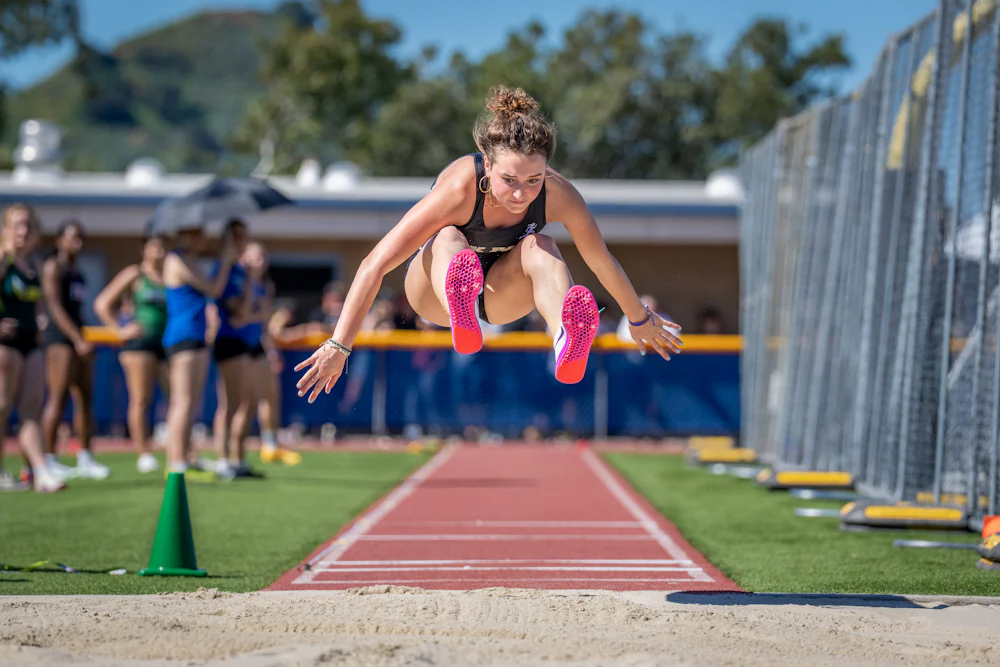
The course
For adults who finished Jumps Foundation, or who have trained regularly for 6 months and can long jump from a short run-up and clear a scissors jump. Each week has a long jump session, a high jump session where you learn the Fosbury flop, and a triple jump and strength session that starts with low bounding on grass before short-approach jumps into the pit. Weeks 4 and 8 are lighter. Weeks 1 and 10 include the same tests.
What you will practice
- Run a 10 to 12 stride long jump approach with a check mark
- Learn the Fosbury flop, from standing back layouts to a 5-stride curve
- Learn the hop, step and jump rhythm on grass, then into the pit
- Plan and count your jump contacts in every session
- Compare standing long jump, 8-stride long jump and high jump height
How the plan is built
- Block 1: Flop basics and bounding on grass (weeks 1 to 4): Long jump moves to 8 and 10 stride run-ups with a check mark. In high jump you learn the back layout of the flop from a standing jump, then from 3 strides. Triple jump starts on grass with a walking rhythm drill and low bounding, so you learn the pattern with little impact. Gym work builds strength for take-offs.
- Block 2: Longer approaches, first triple jumps (weeks 5 to 8): Long jump run-ups reach 12 strides and short flying sprints add speed. The flop moves to a 5-stride curved approach. Triple jump goes into the pit from a short approach, with the take-off mark set so the step lands on the runway and the jump lands well inside the sand. Week 8 is an absorb week.
- Block 3: Competition rehearsal (weeks 9 to 10): You rehearse a club competition: a set warm-up, run-up checks and a limited number of measured attempts with full recovery between them. Volume stays low so you arrive fresh at the week 10 tests.
A week in Block 1
- Session A: Long jump: approach and take-off
- Session B: High jump: learning the flop
- Session C: Bounding on grass and gym strength
Each session is written out in full: the warm-up, every exercise with its sets, distances or times, the rest between efforts and the cool-down. A weekly note tells you what changes from one week to the next.
Technique guide
- Penultimate stride and take-off
- Check mark and approach
- Fosbury flop: approach curve
- Fosbury flop: clearance and landing
- Triple jump rhythm
- Bounding
Tests
You run the same tests at the start and at the end of the plan, so your progress is something you can see:
- Standing long jump
- Long jump from 8 strides
- High jump height
Where you train
A track with a long jump runway and a sand pit dug over and level with the runway, a high jump area with a full-size landing mat and uprights, a flat grass area of at least 30 m for bounding, and a gym or a space with dumbbells and a bench. For triple jump you need enough runway before the pit to set a take-off mark that lands your final jump well inside the sand.
What you need
- Running shoes with good grip. Spikes with short pins only if the track allows them and you already use them.
- A tape measure of at least 30 m for run-ups, check marks and triple jump take-off marks.
- Cones or small markers for start marks, check marks and the high jump curve.
- An elastic (bungee) high jump bar with clips.
- A rake to level the sand after every jump, if the track does not provide one.
- A phone with a stopwatch and camera for timing and filming take-offs.
- Dumbbells or a kettlebell, a barbell if you train in a gym, and a sturdy bench.
This course suits you if
- You finished Jumps Foundation, or you can long jump from 8 strides and land safely.
- You have regular access to a sand pit, a full-size landing mat and a flat grass area.
- You want to compete in a club or masters jumps event next season.
It is not for you if
- You are under 18, or you have current knee, ankle, Achilles, heel or back pain.
- You have never jumped into a pit or onto a high jump mat: start with Jumps Foundation.
Courses are for healthy adults aged 18 and over. Please read our Health and Safety notice before you buy.
What's included
€29, one payment
Instant access after payment. Full refund within 14 days if it is not for you.


One-time payment
€29
Pay once in euros and open Jumps: Development straight away, on any device. Print it or save it as a PDF to take to the track. If it is not for you, ask for a full refund within 14 days.
Also included in the Complete Academy (€199).
Before you buy.
More answers on the FAQ page.
When can I start?
Straight after payment. The link to your plan appears on the confirmation page and arrives by email. You can start on any Monday.
Do I need a coach?
No. The plan is written for adults who train on their own. If you can, ask a friend to film or time your tests. A local club or coach is always a good addition.
What if I miss a session?
Carry on with the next one. Do not squeeze two hard sessions into one day. If you miss a whole week, repeat the previous week before moving on.
Can I print the plan?
Yes. Every course page has a print button, and you can save it as a PDF to keep.
Is it safe for me?
The courses are for healthy adults aged 18 and over. Read the readiness questions in our Health and Safety notice before you start, and check with a doctor if any of them applies to you.
What if it is not for me?
Email us within 14 days of paying and we refund you in full. No questions asked.
Keep going.
The other levels of this discipline, and the same level in another one.

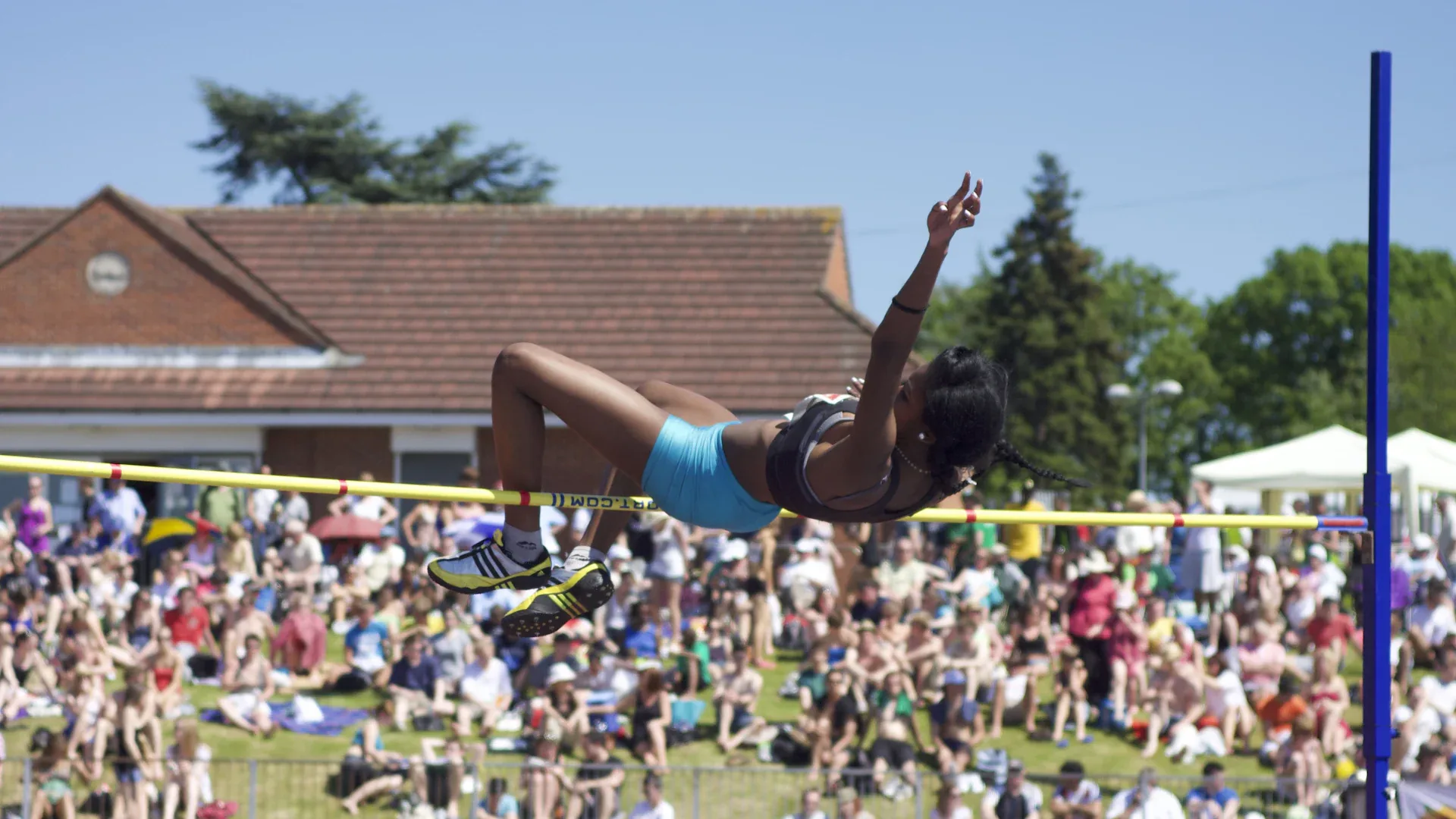

Start Development.
10 weeks, 3 sessions a week, €29 paid once. Your plan opens straight after payment.
