




Training Alone at a Public Track
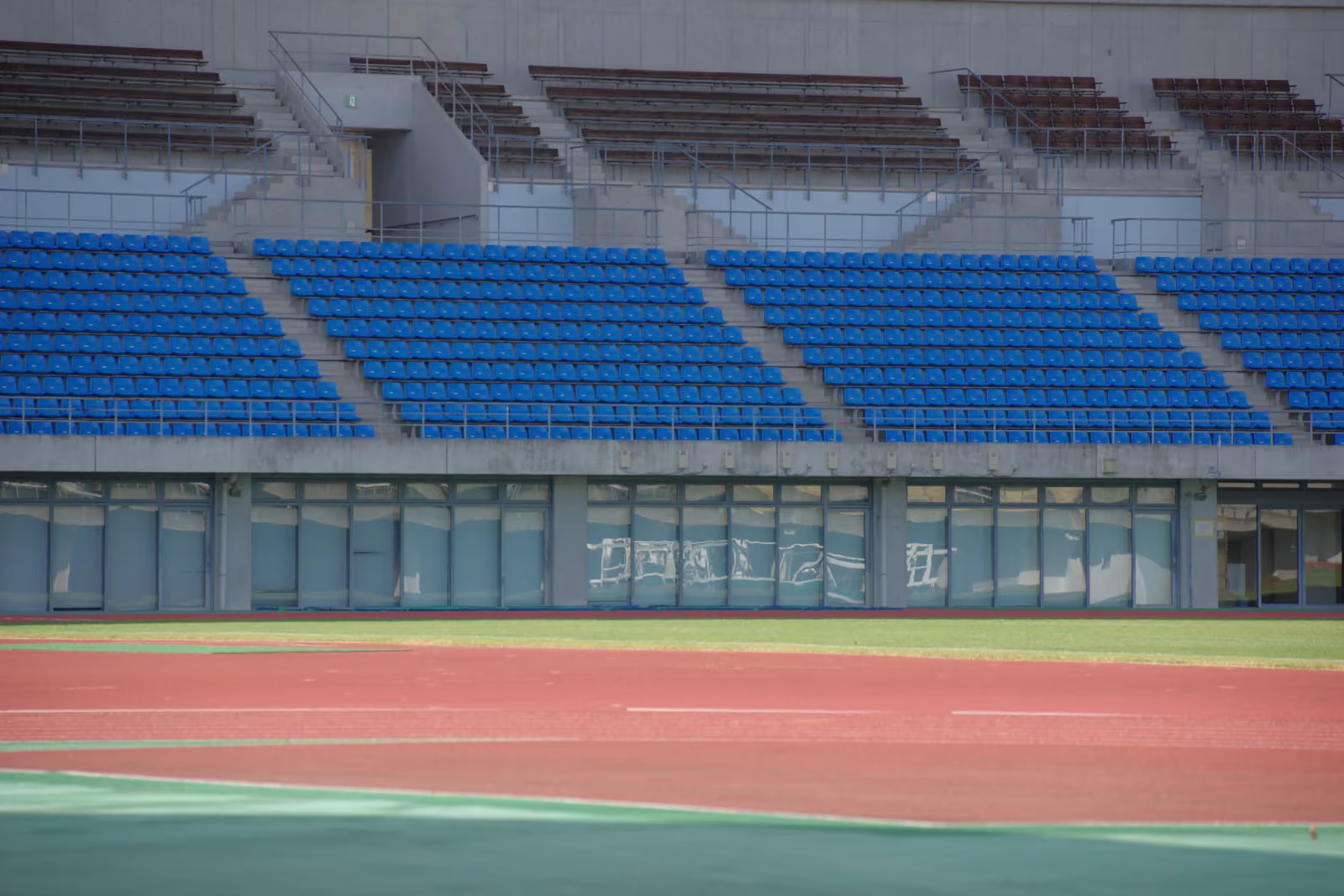
A public track is a shared space: joggers, a school team, a walking group, someone kicking a ball on the infield. Training alone there works well when you know the unwritten rules and plan for the fact that nobody is watching out for you.
Check the venue before you go
Every track has its own rules, and they change. Before your first session, and before any new kind of work, find out:
- The public opening hours, and whether they differ on weekends or school holidays.
- When clubs or schools book the track, and which lanes they take.
- Whether spikes are allowed, and the maximum spike length.
- Whether the jumps pits and throwing areas are open to the public or only to clubs.
- Whether the lights run on a timer, and when they switch off.
Read the signs at the entrance and ask the staff if anything is unclear. If the venue says no to field events, take that work elsewhere. Never improvise a throwing area.
Lane etiquette
Posted signs come first. Where there are none, these habits are common:
- Run in the usual direction, which is counterclockwise at most tracks. Some venues reverse it on certain days.
- The inside lanes, usually 1 and 2, are for faster running and timed reps. Jog, walk and recover in the outer lanes.
- Look over your shoulder before you step onto the track or change lanes.
- When you finish a rep, keep moving and step off to the outside after checking behind you. Do not stop dead in lane 1.
- If someone faster comes up behind you in an inside lane, move out. If you are the faster one, a calm call of "track" warns them early.
- Keep bags, bottles and phones off the running surface.
- Do drills and strides in an outer lane on the straight, or on the grass.
Jumps pits
Before any jump, walk to the pit and look. The sand should be dug over and level, with no rakes, stones, glass or covers left in it. Leave the rake outside the pit with its teeth facing down. Check that nobody is about to cross the runway and that the take-off area is dry. High jump only onto a full-size landing mat, never onto anything improvised.
Throwing sectors
Throws need the most care, because a stray implement can seriously hurt someone. Only throw in a marked sector at a venue that allows it, and use the cage for discus.
- Before every throw, look at the whole landing area and beyond it, then call out clearly, even if you think you are alone.
- Never throw while anyone is in or near the sector, including people crossing the infield.
- Walk out to collect your implements. Never throw them back.
- Carry a javelin vertically, point down, and never run with it except during the throw.
- If others are throwing, stay out of the sector until everyone has stopped and agreed it is clear.
What to bring
- Water and a light extra layer
- A charged phone, for timing and for emergencies
- Your printed plan and a pen for your log
- Flats, plus spikes if the venue allows them
- A tape measure and a few markers
- Sunscreen and a cap in daylight, bright or reflective clothing after dark
Training in the heat
Train in the cooler hours, early morning or evening. A rubber track can get much hotter than the air above it. Drink before and during the session, take your recoveries in the shade and be ready to cut the volume. If you feel dizzy, confused, sick or get a headache, stop at once, move into the shade and ask someone for help.
Training in the dark
Train only where the track is properly lit. Wear bright or reflective clothing so others can see you. Skip the jumps when visibility is poor, and never throw in the dark. Learn where the exits are and keep your phone on you.
Let someone know
Training alone means nobody will notice straight away if something goes wrong. Tell someone where you are going and when you expect to be back. Every Veloce Acad plan carries a safety list for its discipline, so read it together with the venue rules before each new block.
More articles



Train with a plan.
Six disciplines, three levels, one payment.
